
For most people, the history of Soviet video games begins and ends with Tetris. It is a great story: a game created by Alexey Pajitnov on a Soviet computer in 1984 somehow escaped the Iron Curtain and became one of the most recognizable games in the world.
But Tetris was not an isolated accident. By the time it appeared, people across the Soviet Union had already been experimenting with computer chess, programming games on scientific computers, playing electromechanical arcade machines in parks, copying Western games onto Soviet microcomputers, and finding ways to turn machines designed for education, engineering, and military applications into machines for play.
I am currently working on a book about that much larger history.
Beyond Tetris
The project traces the development of games and gaming culture in the Soviet Union and the early post-Soviet period. I am particularly interested in the years between roughly 1980 and 1995, but the story reaches much further back, all the way to the emergence of Soviet computing and cybernetics in the 1950s and 1960s, and forward into the chaotic computer culture that developed after the collapse of the Soviet Union.
This is not simply a catalog of old games. I am interested in what games can tell us about Soviet computing culture more broadly: who had access to computers, what people thought computers were supposed to be used for, how programmers learned their craft, how Western technology crossed the Iron Curtain, and what happened when people began using machines for purposes their designers had never anticipated.
The result is a history populated by engineers, mathematicians, schoolchildren, military factories, amateur programmers, arcade operators, cassette traders, hackers, pirates, entrepreneurs, and collectors.
Playing on Machines That Were Not Built for Games
One of the things that makes the Soviet story so interesting is that there was never a single Soviet equivalent of Atari, Nintendo, or Commodore. Games appeared almost everywhere computers did.
Programmers experimented with chess and other games on large scientific computers. Soviet amusement parks filled with electromechanical shooting galleries, submarine simulators, driving games, and cabinets inspired by foreign machines. When personal and educational computers such as the Agat, Elektronika BK, Vector-06C, Korvet, and numerous Soviet and homemade ZX Spectrum compatibles became available, programmers quickly began writing games for them as well.

Sometimes those games were original and sometimes they were adaptations or direct copies of Western games. In some cases, programmers recreated a game from memory after seeing it only briefly. In many other cases, software was copied outright, modified, translated, cracked, or transformed until the distinction between a port, a clone, and a new game became surprisingly difficult to define.
Fifteen Kopecks at a Time
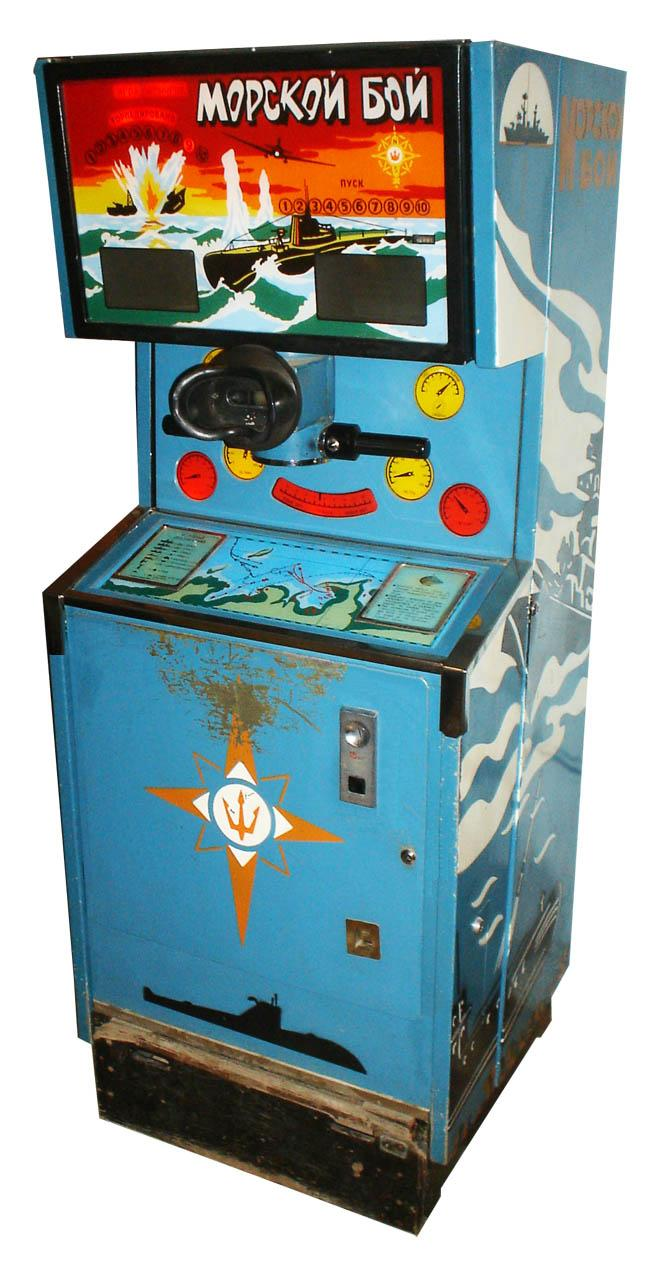
Another part of the project explores the Soviet arcade. Beginning in the 1970s, Soviet parks, cinemas, railway stations, hotels, sanatoria, Pioneer camps, and dedicated amusement halls contained hundreds of varieties of coin-operated machines. A game commonly cost fifteen kopecks.
Some looked strikingly similar to Western and Japanese arcade machines. Others reflected the peculiarities of the Soviet industrial system. Cabinets were produced by factories better known for military electronics and other state manufacturing, and the games that emerged from them frequently involved submarines, torpedoes, rifles, aircraft, tanks, hockey, racing, and tests of coordination.
There were no high-score tables connecting players across the country and no commercial game industry promoting star designers. Yet there was still a gaming culture where children learned which machines were generous, exchanged techniques, discovered mechanical quirks, and occasionally figured out how to exploit them.
The machines were entertainment, but they were also an unusual meeting point between Soviet industrial planning, military technology, consumer culture, and childhood.
Games Behind the Iron Curtain
Western games also circulated far more widely than the phrase “Iron Curtain” might suggest. Sopwith, Digger, Boulder Dash, River Raid, Prince of Persia, Lemmings, and many other games appeared on Soviet and post-Soviet computers in official, unofficial, modified, and sometimes barely recognizable forms.
Software moved through schools, laboratories, computer clubs, workplaces, markets, friends, and networks of hobbyists. Programs were copied from cassette to cassette and disk to disk. Instructions disappeared. Authors’ names disappeared. Games acquired new names. Bugs became permanent features. A program written thousands of miles away could gradually become part of local computer culture with little knowledge of where it had originally come from.
After the collapse of the Soviet Union, these informal systems expanded dramatically. ZX Spectrum clones, homemade computers, software markets, pirate compilations, computer magazines, demoscene groups, and eventually console businesses such as Dendy helped create a distinctly post-Soviet gaming culture.
Rather than treating piracy simply as a legal category, I am interested in how copying functioned as a system of technological circulation. In an environment where legitimate software distribution was limited or nonexistent, copying was also how people learned, preserved programs, discovered new games, and built communities.
Finding the People Behind the Machines
Much of this history was never formally documented. Games were frequently created as side projects, and source code disappeared when laboratories closed or computers were discarded. Software circulated without credits and many programmers who created games never thought of themselves as game developers at all.
I have been tracking down programmers, engineers, computer historians, collectors, arcade specialists, early software entrepreneurs, magazine publishers, and people involved in the first post-Soviet game companies. These conversations often begin with a question about a particular game and end somewhere completely unexpected: a laboratory in Akademgorodok, an Agat computer in a school classroom, a cassette duplicating operation, a West German amusement exhibition in Moscow, or someone remembering the first time they saw a Western game running on a machine they had built themselves.
I am also working with surviving magazines, manuals, technical publications, photographs, software archives, emulator collections, museum holdings, and archival material in the United States and the former Soviet Union. When possible, I run the games themselves, sometimes through emulation and sometimes on surviving hardware, to understand what playing them actually felt like.


You must be logged in to post a comment.