Around the world, many cultures are significantly threatened by the erosion of cultural integrity, climate change, loss of habitat, the environmental impact of globalization, and the ravages of epidemics. Cultures that do not have a strong written tradition are especially threatened – as younger generations move away in search of education and jobs, and as globalization forces linguistic shifts to more “global” languages such as English and Spanish, rich oral traditions either disappear completely or become artifacts in university or library archives, accessible only to small groups of academics. Many initiatives have been activated to preserve and revitalize indigenous cultures, traditions, and languages. While quite a few of these initiatives involve the use of computational technologies and multimedia to document and archive indigenous languages, knowledge, and cultures, much of what has been created to date is primarily designed to serve academic communities and does not provide access to either the broader public (e.g., anyone who wishes to learn about a particular culture) or to the indigenous communities that provided the data in the first place. Moreover, existing systems tend to focus on a single corpus of stories and do not provide possibilities to connect and map stories, characters, and concepts across multiple cultures and languages.
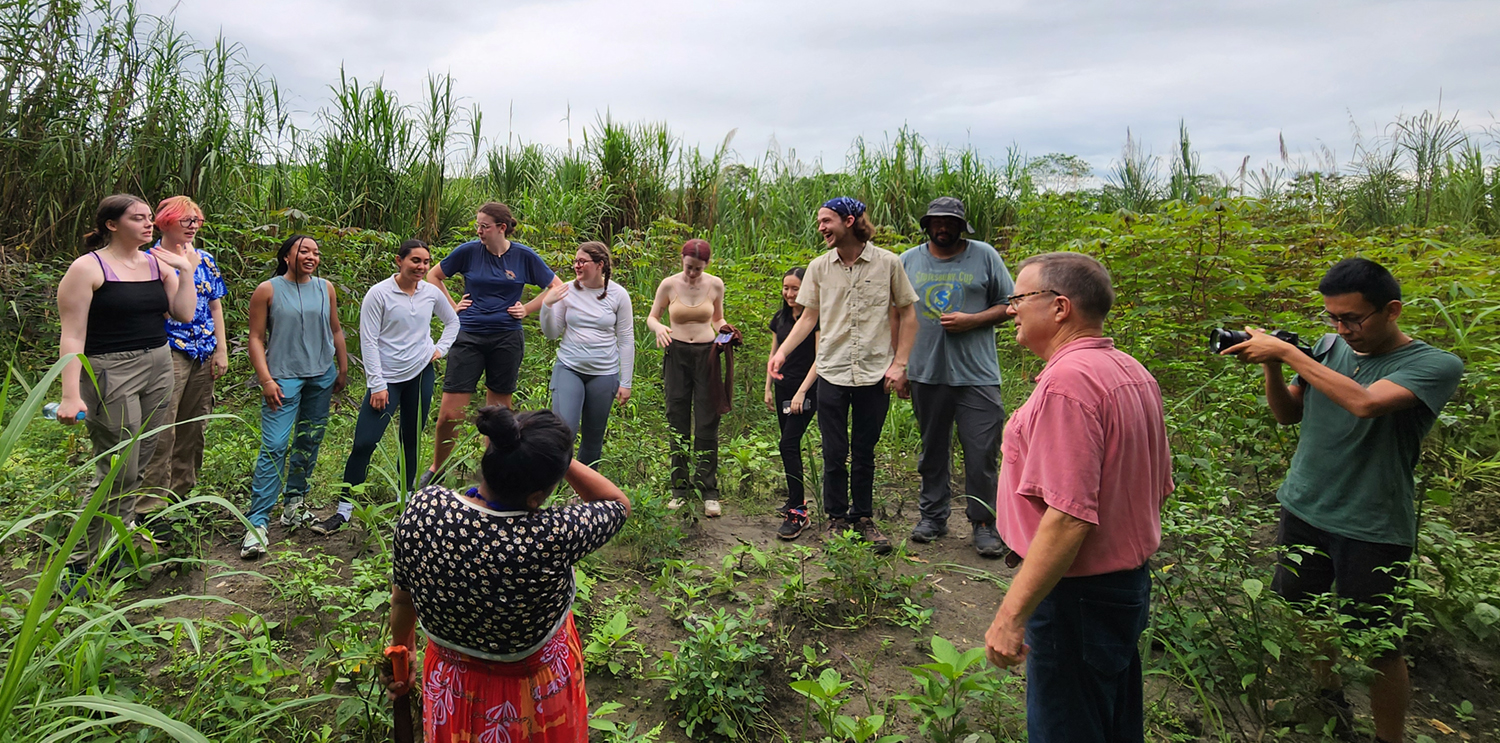
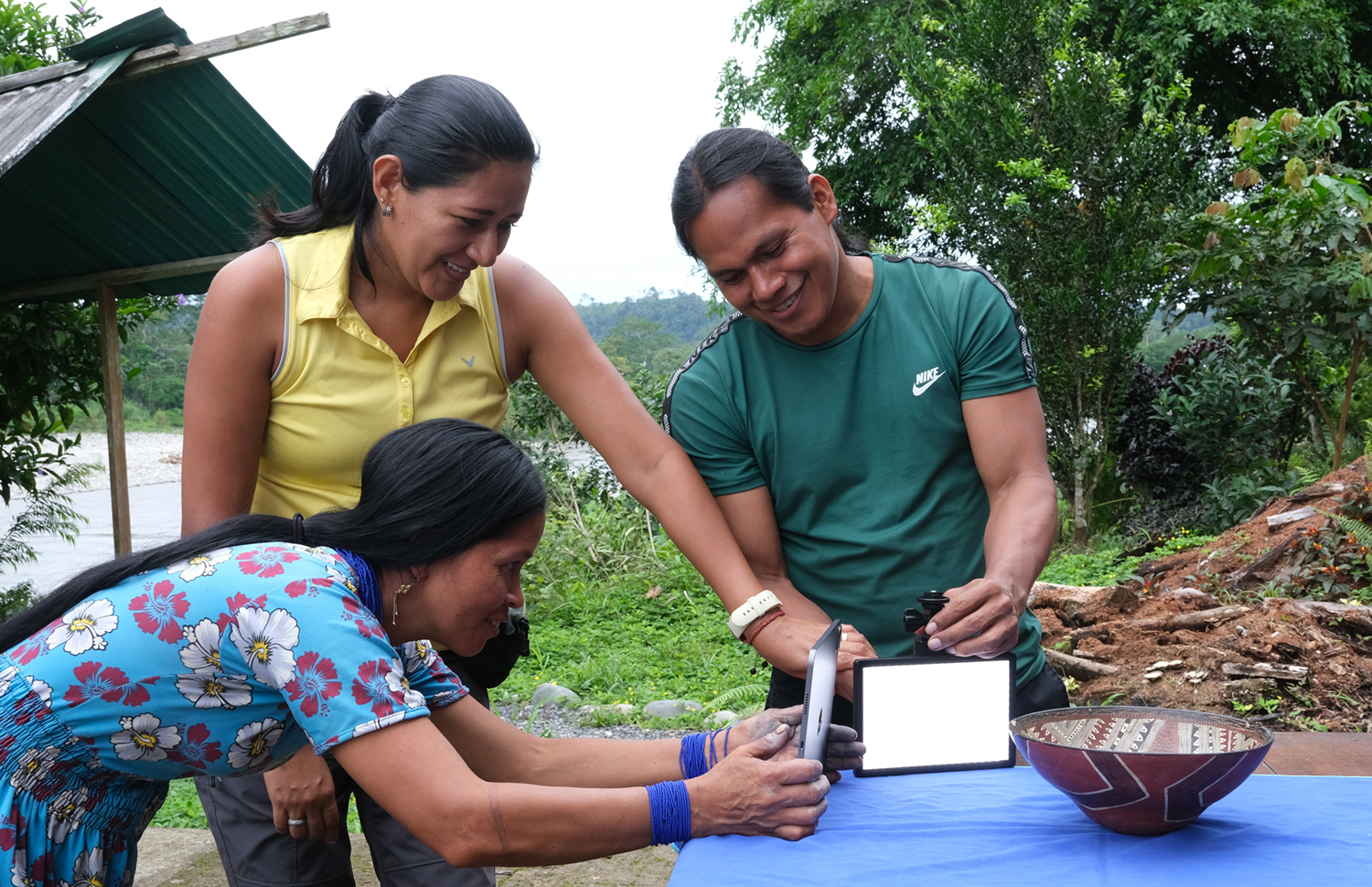
Our team has collaborated with indigenous communities in Ecuador’s Napo region, the Iyarina Field School, Fundación Cotococha, and with scholars from several universities to develop HeritageRoots, a software infrastructure designed for cultural preservation and education. HeritageRoots consists of two interconnected systems – (1) a web-based knowledge graph (KG) data collection and management system which stores, connects, and presents Indigenous traditional knowledge (ITK) in the form of stories, myths, and testimonies from multiple cultures and languages; (2) a virtual environment rendering pipeline which utilizes large language models (LLM), Unity3D, and Meta Quest software development kit (SDK) to procedurally generate virtual worlds from the KG data.
We also began work on developing games + interactive learning systems leveraging Roblox and WhatsApp.
The beta / soft release version of HeritageWorlds knowledge graph is available at https://heritagerootsproject.com
As part of this project, we developed a Kichwa transcription tool, based on Meta’s facebook/mms-1b-all. The source code for this part of the project can be found at https://github.com/learningtechnologieslab/kichwa_transcription
We also developed a heightmap generator for procedurally generating Unity3D terrains. A heightmap is a grayscale image used to represent the elevation of a terrain surface. Each pixel corresponds to a point on the terrain: darker values represent lower elevations, while lighter values represent higher elevations.
In Unity3D, heightmaps can be imported into the Terrain system to quickly create realistic landscapes such as hills, mountains, valleys, and river basins. Unity converts the brightness values in the heightmap into vertical terrain elevations, allowing developers to generate large environments from real-world elevation data or maps created in tools such as Photoshop, Blender, or GIS software. The heightmap generator project is available in a separate GitHub repo: https://github.com/learningtechnologieslab/heightmap_generator/
As we continue building and improving, we’ll publish/open-source more tools.


You must be logged in to post a comment.