My grandfather passed away at two in the afternoon on May 18, 1999, at DePaul Hospital in Norfolk, VA, only three years after he finally managed to leave the former Soviet Union. He struggled with cancer for almost 10 years before finally giving in. The last few days of his life were horrifying. He went in and out of consciousness, his eyes suddenly flying open, his mouth twisting in pain. He did not recognize anyone; whenever the morphine drip would wear off, he’d rant and rave about being betrayed, about guards, about prison. Once he became enraged when my grandmother was trying to walk him to the bathroom; he grabbed a lamp and attacked an imaginary enemy from long ago.
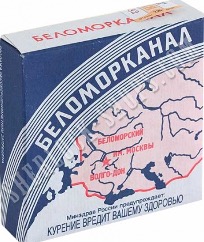
In brief moments of lucidity, he would ask me for cigarettes. Since he could not go outside, I would help him hide in the bathroom to sneak a few Marlboros before collapsing back to his bed. He kept complaining about how weak and tasteless my Marlboros were. For as long as I could remember, my grandfather smoked Belomorkanal, foul-smelling unfiltered cigarettes produced in the USSR to commemorate the construction of the White Sea–Baltic Canal. One time, in my 20s, I tried smoking a Belomorkanal cigarette, and inhaling that smoke felt like swallowing nicotine-saturated sandpaper. When he immigrated to the United States and finished the stash of Belomorkanal that he brought from Belarus, my grandfather switched to Doral 100s. He would break off the filter to make the smoking experience as close to Belomorkanal as possible.
The nurses knew that he was smoking but said nothing. They just sprayed the bathroom with disinfectant to overpower the pervasive tobacco smell, winked at me, and moved on to other patients.
I was 21 years old at the time and the only person in the family who spoke English. Having the unique ability to communicate with doctors and nurses, I was present at every appointment, hospital visit and medical procedure that my grandfather underwent in the last two years of his life. I sat with him through chemo sessions, took him to emergency rooms with perpetual nosebleeds, translated scary words like tumor, malignancy and metastasis and learned more about cancer than I ever wanted to know.
By the time of my grandfather’s passing, cancer had been an on-again off-again boogeyman in our family for about 10 years. My grandfather was first diagnosed with throat cancer in 1989 when I was 12 and my sister was 2. At the time, receiving a cancer diagnosis was equivalent to receiving a death sentence. You were a dead man walking. Local hospitals did not have oncology departments, and chemo and radiation treatments were still in rudimentary stages. I had a friend whose father died of gastric cancer, and as soon as he told the people around him about his diagnosis, he was treated with the worst kind of pity. The kind of pity where people avoid eye contact, smile sorrowfully and try to walk away as quickly as possible.
We did not tell anyone about my grandfather’s diagnosis. My grandmother and my mom called in a lifetime’s worth of favors to secure him a spot at a specialized cancer center in Minsk, about three and a half hours by train from Gomel. Within days of starting the chemo, my grandfather turned from a tough, indestructible man into a barely recognizable shell. He lost all his hair; his skin hung loose around his sunken eyes. He could barely walk and spent most of his days sitting in a chair, staring at nothing. My mom and grandmother took turns going to Minsk; my grandmother would go on weekdays, and they’d switch on weekends. My sister and I shuttled back and forth between my grandparents’ and my mom’s apartments.
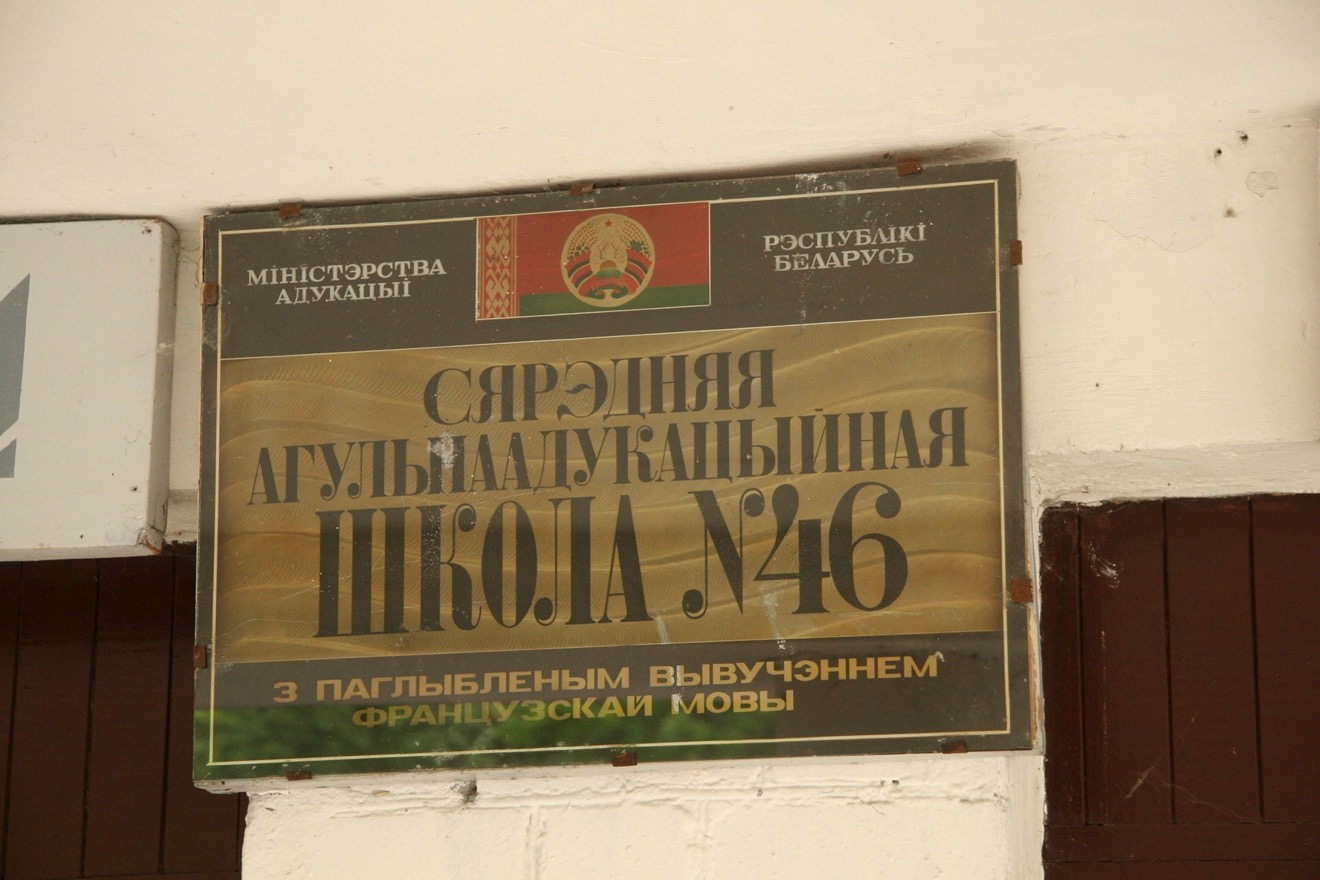

One time, I forgot my school uniform at my grandparents’ apartment. By the time I realized that I had nothing to wear to school, I was already on the bus to my mom’s house and my grandmother was on the train to Minsk. In Soviet schools, uniforms were mandatory. Boys dressed in blue slacks, white or blue button-down shirt, a blue blazer, and a red Pioneer scarf. Girls dressed in brown dresses with white aprons and red Pioneer scarves. Wearing the Pioneer scarf was a big part of Soviet childhood. At the age of 10, every Soviet child was inducted into the Vladimir Lenin All-Union Pioneer Organization. Being a pioneer, was an honor and a point of pride for most children of my generation … and it came with eight commandments.
- A Pioneer is dedicated to the Motherland, the Party, and communism.
- A Pioneer is preparing to become a Komsomolets (Комсомолец)[1].
- A Pioneer follows the examples of heroes of struggle and labor.
- A Pioneer remembers fallen soldiers and prepares to become a defender of the Motherland.
- A Pioneer is persistent in studies, work, and sports.
- A Pioneer is an honest and true friend, always standing up for what is right.
- A Pioneer is a friend and leader to Little Octobrists (Октября́та)[2].
- A Pioneer is a friend to other Pioneers and to the children of workers of all countries.
As you can see, being a Pioneer was a serious business, and as children, we took it very seriously. In school, we held class meetings that were styled in a courtroom fashion. A panel consisting of a teacher and the class Soviet (kind of like class government) sat in front of the classroom. Students who were falling behind in their studies or were accused of bad behavior would be brought out in front of the Soviet and the class to answer for their sins. Then, as a class, we would decide on what actions should be taken and, in rare cases, whether a student should continue to have the privilege of being called a Pioneer. We also discussed broader matters, like helping the elders, collecting scrap metal, recycling, and volunteering for Subbotniki[3] – weekends of volunteer work. Being a Pioneer was a serious business.
I loved being a Pioneer. Every day I made sure that my red Pioneer scarf was ironed and tied around my neck using the regulation knot. I strove to follow all the commandments, to be a good student, a good friend, and a good future communist. That is, until I forgot my school uniform at my grandparents’ apartment.
For the first time since first grade, I came to school without a uniform, without my red Pioneer scarf. As soon as I walked through the door, I was stopped by the school’s technichka[4], the gatekeeper of every Soviet school and the omnipresent protector of clean floors. “Babichenko, come here”, yelled the technichka. “Where is your Pioneer scarf? You cannot go to class out of uniform!” She grabbed my sleeve and led me to the principal’s office. Our school’s principal, a sullen man in his late forties whose last name, if read backwards, formed a curse word, told me to sit in his office and wait. He left and came back a few minutes with the vice principal. For about 30 minutes they interrogated me as to why I wasn’t dressed like a Pioneer and lectured me on Pioneer’s honor and duties. My mom asked me to keep my grandfather’s cancer a secret, but after the principal threatened to expel me from the Pioneers, I broke down. I explained to them what was going on, and after a brief discussion, they told me that I could go to class.
When I came to class, the scene that played out in the principal’s office replayed itself again, only now my math teacher ran the interrogation. When I told her that I can explain things to her in private, she said that as a Pioneer I should have nothing to hide from my classmates and that I am obligated to tell the truth in front of the whole class. When I refused, she told me that she would bring this up to the class Pioneer Soviet and let my peers decide whether I am worthy of being a Pioneer. At that point I lost it. I was a 13-year-old kid whose parents were on the verge of divorce, whose grandfather had cancer, who was constantly asked to watch his little sister, and who was interrogated like a criminal for not wearing a Pioneer scarf to school. Up until that point in my life, I had never disrespected a teacher (or any adult for that matter). The words that came out of my mouth would be difficult to translate into English, but with a bit of censure, it probably looked something like “^$%@#^$#!%$^ #*%^*%^$&^%$ ))^&) Pioneers (*&(*&. )&^*&^ school &^%_+@$#@$@ red scarf.” I walked out of the classroom, marched to the principal’s office, and told him that I no longer wanted to be a Pioneer.
All hell broke loose. After a bout of screaming and shaming, the principal, the vice principal, and the principal’s secretary tried to call my family. No one answered. My grandparents were in Minsk at the cancer treatment center, and my mom was at work.
The next day I turned in my red Pioneer scarf…
[1] Komsomol – the All-Union Leninist Young Communist League (Russian: Всесоюзный ленинский коммунистический союз молодёжи (ВЛКСМ)).
[2] Little Octobrists (Russian: Октября́та) was the name of a youth organization for children between 7 and 9 years of age.
[3] Subbotnik (from Russian: суббо́та, for “Saturday”) are day(s) of volunteer unpaid work, usually on Saturdays. Subbotniks were common in the Soviet Union and the work ranged from street cleaning to scrap metal collection to construction.
[4] Technichka: a term used in Soviet schools to describe female custodians.
 Dmitriy B.
You must be logged in to post a comment.