The chonta palm (Bactris gasipaes) is commonly known as the peach palm. It’s a spiky tree that grows in the Amazon, and once a year it produces big orange/reddish fruit. When I first saw it from a canoe, a giant bundle of what looked like tomatoes hanging above the rainforest canopy, I though to myself – “How the hell do people get to this tree?”
For the Kichwa and Waorani communities, chonta is a staple. Chonta fruits look like tomatoes, but they taste like potatoes and make for an incredibly filling meal.
Getting to the tree is a chore in and of itself. We took a canoe from a small Waorani family village in Gayapare (Ecuador). After climbing up a steep muddy bank, our hosts hacked their way through incredibly dense jungle, carving a narrow path through the vegetation. When we finally made it to the base of the chonta palm, I had another “holy crap” moment. As you will see in some of the photos below, chonta trunk is covered in giant spikes, making it impossible to climb.
The only way to get to the chonta fruit is to climb up a more welcoming tree adjacent to the chonta palm and use a long pole to knock down the bright orange bundles.
Giki, the family elder, stripped a long piece of flexible bark from a nearby tree and made a loop. Whoever would climb the tree would put the loop around their ankles to create additional friction with the tree trunk.
Once up an adjacent tree, the climber would grab a long pole (made of a long sampling) and use that pole to knock down chonta bundles.

The view of a chonta palm from the canoe.

Chopping through dense vegetation
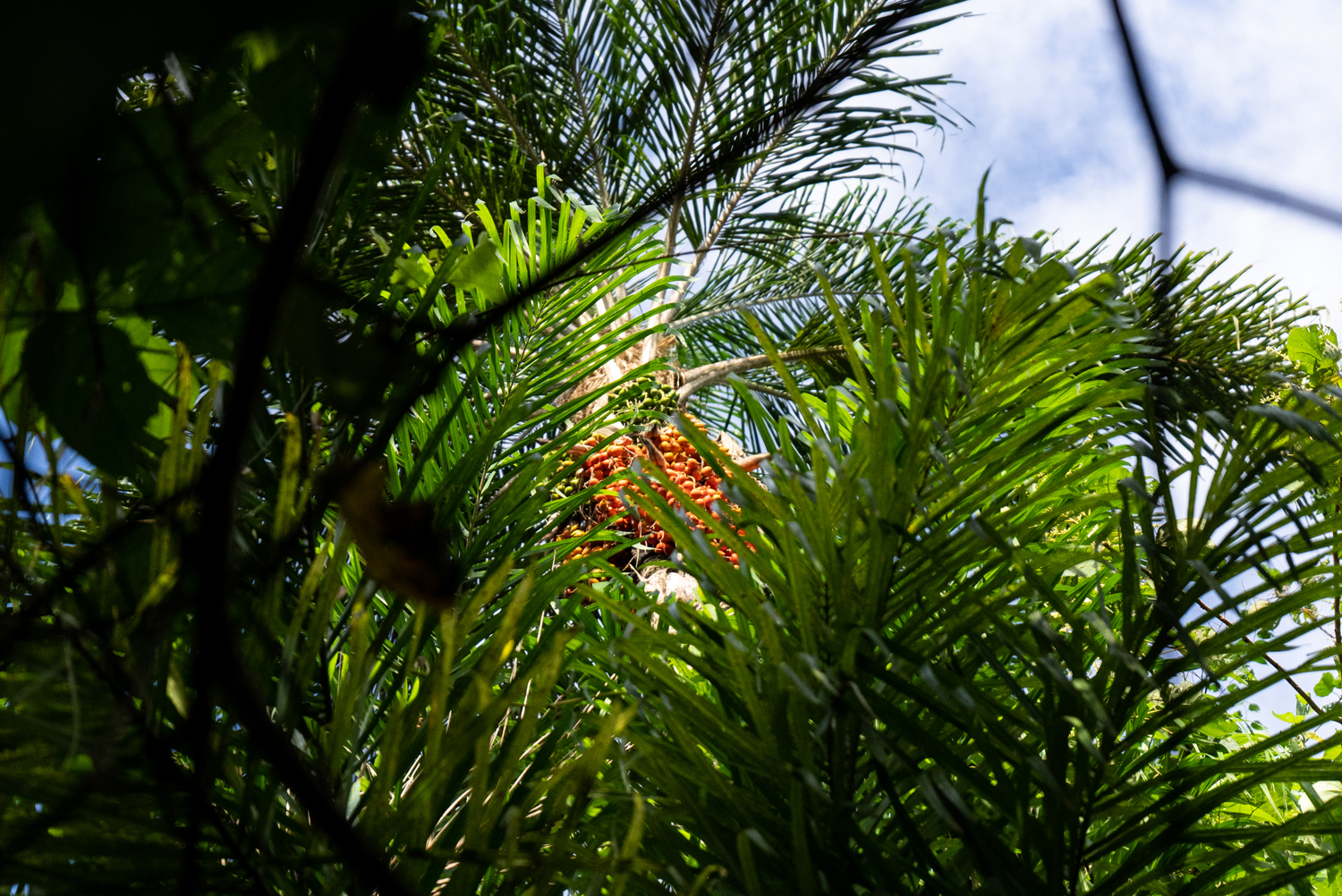
Getting closer – a narrow view of the chonta fruit bundle through dense rainforest vegetation

The incredibly sharp spikes on the trunk of the chonta palm.

Giki, a Waorani family elder, is making a long pole with a hook at the end from a young palm trunk. This pole will be used to knock down the giant bundles of chonta fruit.

Giki, a Waorani family elder, is making a loop from flexible strips of bark. Since it is impossible to climb the chonta palm itself, harvesters climb an adjacent tree, one with a more forgiving trunk. To make climbing easier, they put this (or similar) loop of bark around their feet to create additional pressure against the tree trunk.

Climbing a tree adjacent to the chonta palm. Since it is impossible to climb the chonta palm itself, harvesters climb an adjacent tree, one with a more forgiving trunk. To make climbing easier, they put a loop made of flexible strips of bark around their feet to create additional pressure against the tree trunk.

Trying to knock down a bundle of chonta fruit with a long pole.


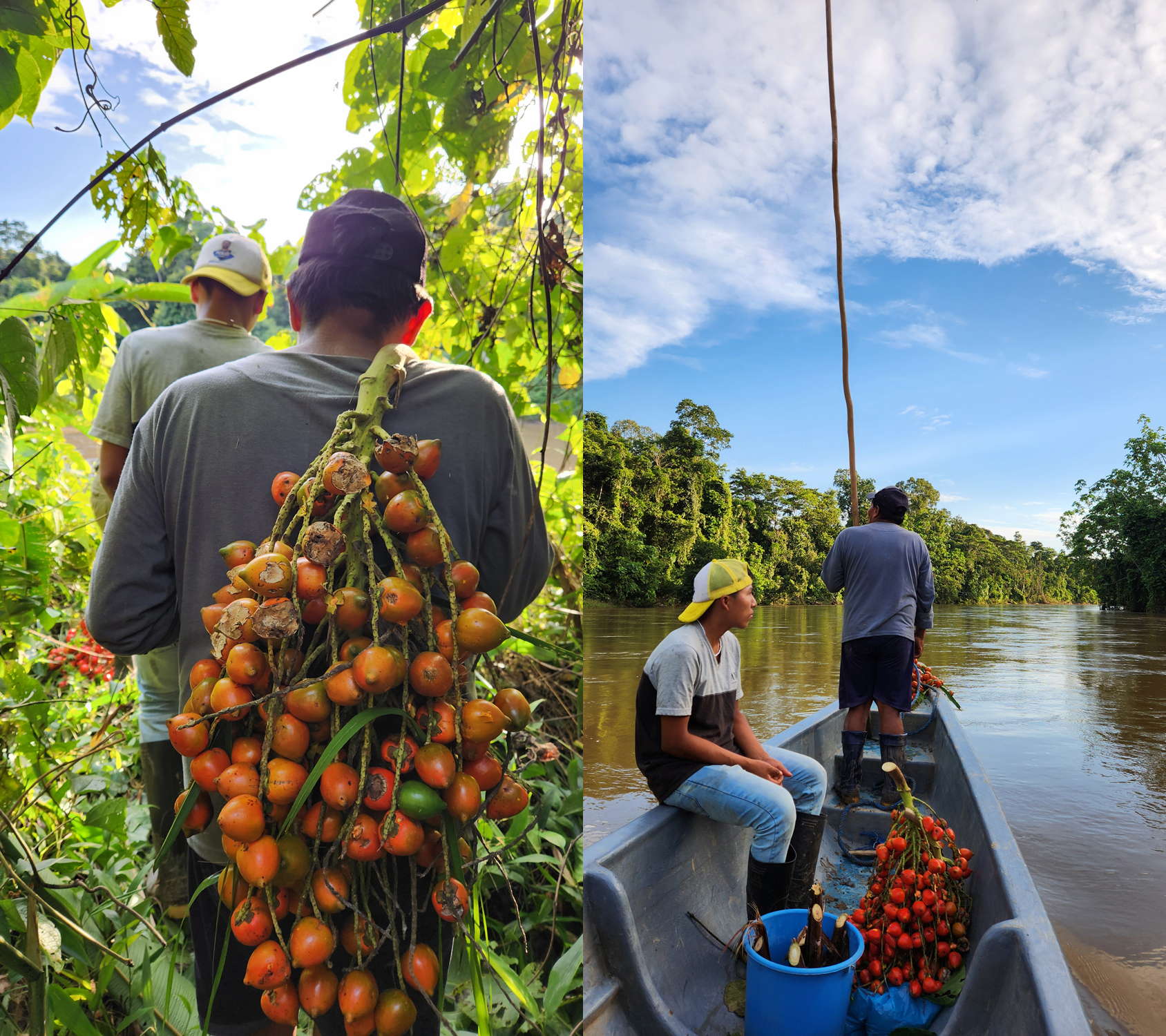
Carrying chonta fruit bundles back to the canoe

The large wooden tub is used by Kichwa and Waorani women to mash chonta as one of the steps in preparing chicha.

Belgica Dagua cleaning boiled chonta fruit at the Iyarina Field School in Napo, Ecuador.

Belgica Dagua and Elodia Dagua preparing chonta.
 Dmitriy B.
You must be logged in to post a comment.