Our family’s first attempt to leave the Soviet Union goes all the way back to 1956. In 1953, my grandfather was released from Vorkuta Gulag (more on that later). After serving a 10-year sentence as a political prisoner, he was free of the labor camps, but not of Vorkuta. As part of his release conditions, he was sentenced to five years of “loss of rights”, a common practice in the Soviet Union where political prisoners weren’t allowed to live in major cities, hold certain jobs, or travel without special permission from militsiya.
On February 25 of 1956, Nikita Khrushchev spoke to the 20th Congress of the Communist Party about the cult of personality and its consequences. In his speech, Khrushchev criticized Joseph Stalin and the purges of the 1930s. This speech signaled the beginning of the Khrushchev Thaw, a new period in Soviet history when repression and censorship were slightly relaxed, and millions of political prisoners were released from Gulag labor camps. As part of the Thaw, certain groups of former foreign nationals from Poland, Czechoslovakia, Hungary, Yugoslavia, and other Soviet-bloc countries, were allowed to repatriate to their respective homelands. My grandfather was born in Grodno (Hrodna), a city eastern Poland. In August of 1939 the German and Soviet Foreign Ministers von Ribbentrop and Molotov signed a non-aggression treaty between Germany and the USSR. Unofficially known as the Hitler–Stalin Pact, the treaty divided Poland into Soviet and German spheres of influence, and Grodno became part of the Soviet Union. However, since at the time of his birth my grandfather was a Polish citizen, the new repatriation laws gave him an opportunity to immigrate to his homeland.
Being completely isolated from the rest of the world in Vorkuta from 1943 to 1953, and not being able to even write letters, my grandfather had no idea of what happened to his family in Grodno, and if any of the family members survived the war and the Soviet purges. He did not know if it would be possible for him to repatriate to Poland, especially given that he was now married to my grandmother (a Soviet citizen) and had a 1-year-old daughter.
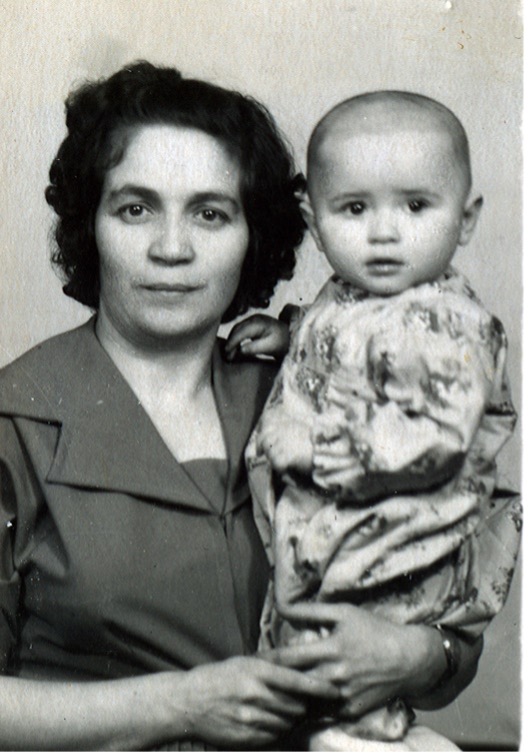
In order to travel from Vorkuta to Grodno, he had to request travel papers from militsiya.Unfortunately, for reason known only to the Soviet Government, my grandfather’s travel request was denied. Desperate to find out what happened to my grandfather’s parents and sisters, my grandparents bundled up their one-year-old daughter and bought train tickets. 1956 train transportation in the Soviet Union required many stops, many train changes, and dealing with an unreliable schedule. The most terrifying part of this trip for my grandparents was that at any of the stops or train changes militsiya could check my grandfather’s passport and his (lack of) travel papers and arrest him on the spot.
After almost two weeks of train hopping and sleeping in train station waiting rooms, they finally made it to Grodno. They wandered around the city, trying to find any friends or relatives who survived the war and the purges. At first, they did not have much luck. People who now lived in houses previously occupied by my grandfather’s friends and relatives did not know what happened to the pre-war occupants. Most people were terrified of strangers and slammed doors into my grandparents’ faces. Some, upon hearing my grandfather’s accented Russian, threatened to call militsiya or the KGB. A few kinder souls speculated that most likely the people that my grandfather was searching for were killed when the Grodno Ghetto was liquidated in 1943.
After wandering around Grodno all day, they finally came to an old brick building on Ozhesko Street. When I interviewed my grandmother about this event in 62 years later, in 2018, she had a surprisingly vivid recollection of what the man looked like and how he was dressed, but she could not remember his name or how my grandfather knew him. When my grandparents knocked on the door, they waited for a long time for someone to respond. Eventually, the sound of heavy boots on old wooden boards announced that someone was at home. The door opened a tiny bit, and a narrow face with a thin long nose and a scraggy beard peered through the crack. The man stared at my grandfather for a few moments and his eyes widened in recognition. “Abram! Is that you?” – asked the man. He did not invite my grandparents to come in, nor did he even open the door all the way. He stuck his head a bit further out and nervously glanced around the street. “My family and I are visiting from Vorkuta for a few days” – answered my grandfather. “Can we come in?” The man nervously looked around, then glanced back into the house, as if conferring with someone else. “Now is not a good time Abram. I’m sorry, but you’ll have to find another place to stay.”
“I don’t need a place to stay,” – answered my grandfather. “I just need to find out what happened to my family. Is anyone left here in Grodno? Do you know what happened to any of my sisters?”
The man glanced back at the unseen person inside the house again. “I’m sorry Abram, I don’t know for sure. I heard some rumors, but I don’t know for sure if they are true. Your older sister married that guy from the orchestra and left Poland for the Soviet Union right before the war. I heard that your younger sister was killed. Someone told me that she tried to go into a store that was off-limits to Jews. When a German officer grabbed her and threw her out, she spit in his face. He shot her right there and then. I’m sorry.” The man shuffled nervously and looked back inside the house again. “Your parents probably died in the ghetto, but I don’t know for sure. I did hear rumors that your…” – he paused and glanced at my grandmother who was holding a baby – “that your first wife and daughter survived. I don’t know where they are though. Your old house is still there – somehow it survived the bombings, but I have not seen or heard from anyone in your family since I came back. I really cannot tell you anything more.” The man looked around the street again and shut the door.
Shocked by this reception, my grandparents started walking down Ozhesko Street towards my grandfather’s childhood home. They did not make it too far. A few hundred meters down from the unfriendly man’s house, the street abruptly ended in a large ditch. A group of ragged German war prisoners were digging the frozen ground with shovels and laying large metal pipes. At first, my grandfather wanted to take side streets to go around the construction zone. As soon as he turned to walk to the neighboring street, he saw a group of armed uniformed guards blocking the alleyway. Without proper travel papers from Vorkuta militsiya, my grandparents could not afford to get stopped. They turned around to walk back towards the train station when they saw another group of armed guards. My grandfather turned white; he grabbed my grandfather and my one-year-old mother and started to quickly walk in a seemingly random direction, as long as it was away from the guards.
They were so rattled by the experience that they did not stay in Grodno. They spent the night huddled at the train station and in the morning took the first train that was headed in the direction of Vorkuta.
After returning to Vorkuta, my grandfather became even more determined to repatriate to Poland. Going directly to militsiya offices and to prison offices to find out what he would need to do to repatriate was out of the question. Officials’ reactions were notoriously unpredictable. Depending on a bureaucrat’s mood or on the quality and the size of my grandfather’s vziatka[1], he could have ended up back in the coal mines before he ever had a chance to leave Vorkuta. So, just like every reasonable Soviet citizen, he began to ask close friends and trusted acquaintances about various pathways to obtain permission for repatriation. Because he was married and had a child, the law stated that all relatives from both sides had to give their formal written blessing to allow my grandparents and their child (my mother) to leave the USSR. My grandfather did not have any living relatives, but my grandmother had a father and two sisters in Kiev, and one sister in Kazakhstan. All of these family members had to write letters stating that they had no objections regarding my grandparents’ immigration plans. Writing such a letter in and of itself was dangerous. By 1954 NKVD was succeeded by a new agency with a terrifying three-letter acronym – the KGB[2]. That omnipresent and seemingly omnipotent agency knew everything about everybody. If a relative wrote a letter in support of my grandparents’ immigration, that letter would certainly end up in the KGB archives, and the KGB would know that the person who wrote this letter possibly has anti-Soviet tendencies since they were careless enough to allow someone to leave the USSR.
To this day, I don’t know if all members of my grandmother’s family gave their blessing to the immigration plans. I do know, however, which one explicitly did not.
Berta Marchevskaya (or Aunt Berta to me) was my grandmother’s oldest sister. In many aspects, she was like a third grandmother to me. She never had kids of her own. By Soviet standards, she married fairly late in life, and as far as I could tell her marriage was an unhappy one. Her husband, David Gelman, passed away in 198x. Left alone in a small apartment in Kiev, she turned her attention to her nieces and nephews. Or rather, one nephew. I’m not sure why Aunt Berta favored me over my cousins, but throughout my childhood and teenage years I spent at least a month of virtually every summer with her in Kiev. She spoiled me by taking me to stamp shops and philatelic exhibitions, and she bought me as much film for my camera as I wanted.
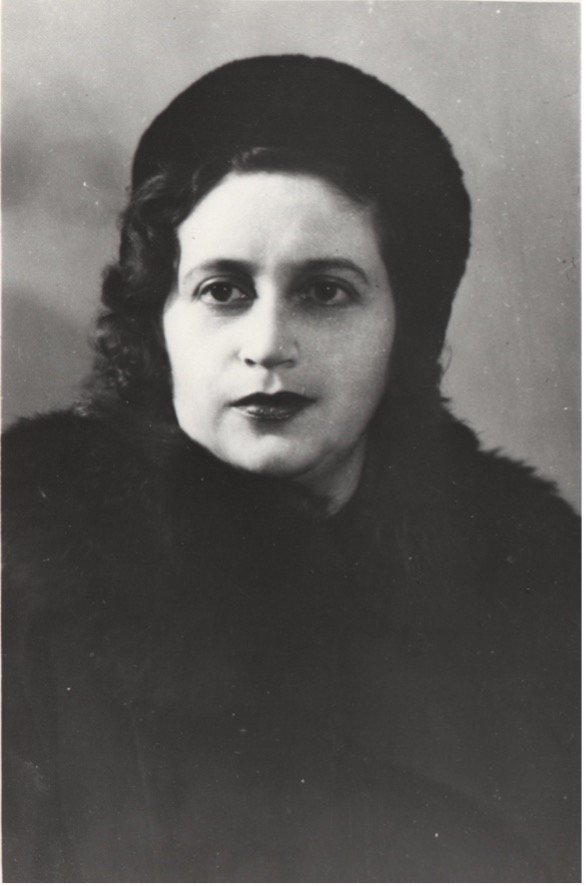

Many years later I found out that she effectively stopped my grandparents from immigrating to Poland. I could not glean too many details from my grandmother. At the time when I tried to interview her, she was 101 years old and her memory was a bit fuzzy when it came to details, but she did seem to remember that Aunt Bertha not only refused to write a letter in support of their repatriation to Poland, but she also threatened to write a letter to the KGB and have my grandfather arrested if he ever brought up the topic of immigration.
[1] Vziatka (Russian: взятка): bribe
[2] KGB: Komitet Gosudarstvennoi Bezopastnosti (English: Committee for State Safety. Russian: Комитет Государственной Безопасности)
 Dmitriy B.
You must be logged in to post a comment.