Independent Study Projects for Fall 2014

Ladies and Gentlemen,

We are looking for students who are interested in gaining practical experience by working on analyzing, designing, and implementing real information systems for real clients.  These projects are structured as independent studies and you will receive academic credit (3 credits) upon project completion.  If you chose to accept this mission, be prepared to spend approximately 10 hours a week working on your project. 

These projects are a great opportunity for students to gain experience, build your resume, satisfy the School of Information Sciences capstone requirement and, if you do good job, get recommendation letters from satisfied clients.

If you are interested in working on any of the projects listed below, please contact Dmitriy Babichenko – dmb72@pitt.edu.  Send the name of the project you are interested in and make sure to attach your resume.

___________________________________________________________

Client: WISER Simulation Center
Project: Physician training feedback system. 
Tasks:  Design a web application that would allow WISER staff to schedule training and simulation sessions and to provide feedback for simulations.  Database and notification systems have already been designed last semester.
Database: MySQL
Programming Language:  C#
Team size:  1-2 students

___________________________________________________________

Client: Magee Hospital
Project: OB Data Standard for EMR Systems
Tasks:  Build web-based data entry forms for an existing MySQL database using an off-the-shelf form generating software such as Rackforms (https://www.rackforms.com) or JotForm (http://www.jotform.com/). 
Database:  MySQL
Programming Language:  Minimal PHP
Team size:  1 student

___________________________________________________________ 

Client:  Department of Medicine, Division of Hematology/Oncology
Project: Tracking system for bleeding disorders in women
Tasks: Design a responsive web-based application to help women with bleeding disorders track bleeding episodes and reactions to medications.  This project will involve collecting requirements from medical researches, designing and building a responsive HTML5 front end and, if time permits, a MySQL database to store data.
Database:  MySQL
Programming Language:  JavaScript, HTML, PHP or Java
Frameworks/Libraries:  jQuery, Bootstrap
Team size:  2 students (at least one with web or mobile design experience)

___________________________________________________________ 

Client:  School of Information Sciences
Project:  Resume Management System
Tasks:  Last semester a team of 3 students built a prototype of a resume management system for the School of Information Sciences.  I am looking for 3-4 students to complete this project and produce a beta version (ready for user testing) by the end of the fall 2015 semester.
Database:  MySQL
Programming Language:  HTML, JavaScript, Java
Frameworks/Libraries:  jQuery, Bootstrap, Backbone.js (nice-to-have)
Team Size:  3-4 students


Building a guitar

In his book Outliers: The Story of Success, Malcolm Gladwell tells stories of Bill Gates, the Beatles, and many others who became incredibly successful.  He (Gladwell) claims that it takes 10,000 hours of deliberate practice to become really good at anything – music, painting, programming, flying airplanes.

In theory, 10,000 hours sounds great, but who has the time?

I recently became a member at Pittsburgh TechShop, a fabrication and prototyping studio in Pittsburgh’s Bakery Square.  That place is absolutely amazing – the first time I came in for a tour, I was pretty damn close to jumping up and down in excitement when I saw all the CNCs, milling machines, laser cutters, and 3D printers.

I had a goal in mind when I joined TechShop – I wanted to build a guitar.  Speaking of 10,000 hours of practice, I’m not a very good guitar player.  That being said, I’ve always wanted to own a National steel body guitar.  Unfortunately for me, National guitars cost thousands of dollars, so unless someone wants to make me a really really really expensive gift, I’m pretty much s**t out of luck.  So I decided to build my own.

Steel is a fairly expensive (and difficult) material to play with; it is also very time consuming to prototype anything in metal (unless you have the money to use the very expensive water-jet cutter).  I decided to prototype my guitar in wood, first starting with a small-scale ukulele-sized prototype, and scaling up as I got better with proportions and details.

I modeled my design after Gibson Les Paul, another guitar of my dreams.  I traced a photograph of a Les Paul Studio in Corel Draw and made drawings for Trotec Laser Cutter.  It has no frets, but boasts ukulele tuning pegs, ukulele strings and bass guitar tuning!

Les Paul guitar drawing

My first prototype looked good, and I looked pretty damn good forcing horrible noises out of it.

Playing DIY Guitar

Now my kids have a new toy and I’m moving on to the next prototype.  I already laser-cut templates out of cardboard and will hopefully move on to making the first steel prototype in a few weeks.

I just hope it doesn’t take me 10,000 hours to reach the final destination.

Experiments with physical computing and conductivity

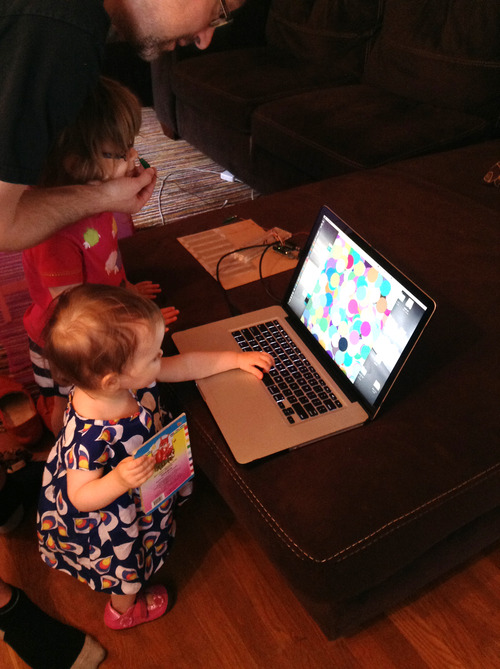
My kids and I did some hands on experiments with physical computing and electricity. Initially I only intended to do these experiments with Daniella, but Sophia seems to be pretty interested as well. Using an Arduino board, a breadboard, a 10OM resistor and a few wires we made a simple capacitive sensor. Capacitive sensors take human body capacitance as input and (depending on sensitivity) detect anything that is conductive.  I wrote a simple Arduino sketch that would randomly draw colored circles on the screen when our sensor detected conductivity.  Basically we took a bunch of household items – metal spoons, plastic spoons, cups, wooden plates, etc… and connected them to the circuit using a small crocodile clamp.  When Daniella would touch a conductive object (like a metal spoon which conducts electricity), the program would begin to draw circles on the screen.  One of the items we used was a piece of paper.  While dry it would not conduct electricity; however when we dipped it in water and connected it to the circuit, the capacitive sensor detected touch once again.  This experiment had a dual purpose – she learned how different materials conduct (or don’t conduct) and got a vague introduction physical computing.

Experiments with physical computing and conductivity

tumblr_inline_mod2dkphKM1qz4rgp

tumblr_inline_mod2dsLWzP1qz4rgp

tumblr_inline_mod2efIrbP1qz4rgp

tumblr_inline_mod2ekdjOQ1qz4rgp


You can find detailed instructions on how to create capacitive sensors on Insructables website (Turn a pencil drawing into a capacitive sensor for Arduino) and on Arduino Playground.

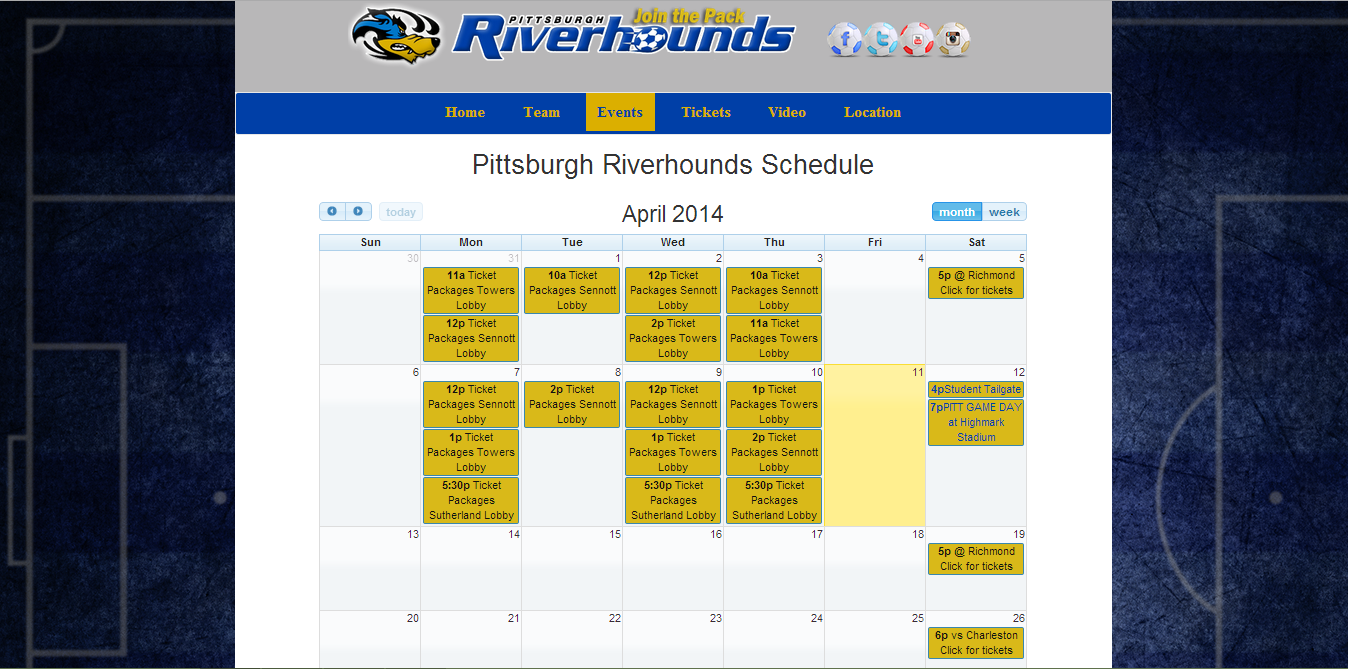
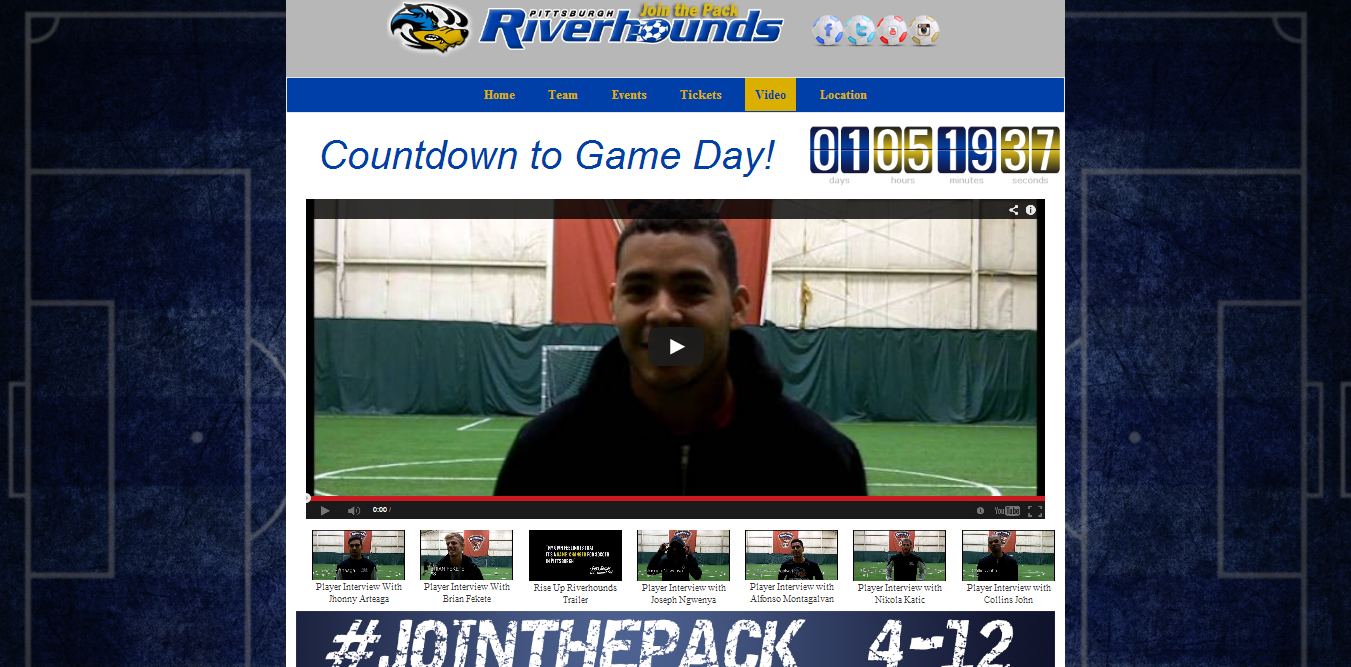
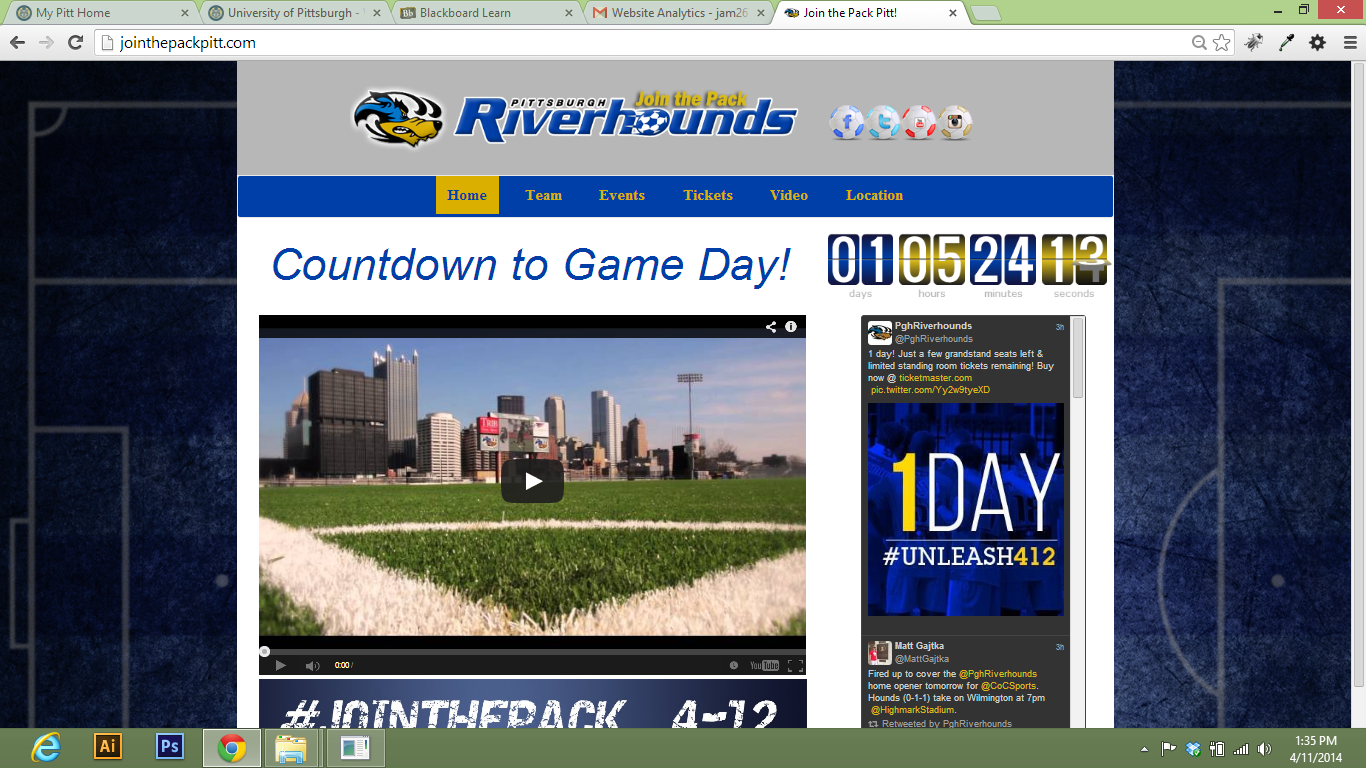
Marketing website for the Pittsburgh Riverhounds

home

Marketing website for the Pittsburgh Riverhounds
team

tickets

Marketing website for the Pittsburgh Riverhounds

Project:  Marketing website for the Pittsburgh Riverhounds

Dates(s):  Spring 2014

Students:  Mandy Kendall, Jacob Mangone.

Programming languages/platforms/technologies:  PHP, MySQL, Bootstrap, HTML5

Description:  iSchool students worked closely with a group of undergraduate students from the University of Pittsburgh Business School to develop a website for a marketing campaign for the Pittsburgh Riverhounds soccer team.

First draft of a data standard for obstetrics and gynecology electronic medical records (EMR) system for Magee Women’s Hospital.

First draft of a data standard for obstetrics and gynecology electronic medical records (EMR) system for Magee Women’s Hospital.

Project:  First draft of a data standard for obstetrics and gynecology electronic medical records (EMR) system for Magee Women’s Hospital.

Date(s):  Spring 2014

Students:  Joshua Howell, Naveen Srivastava, Ayla Gounder, Clinton Wojick.

Programming languages/platforms/technologies:  MySQL, Java, Python

Description:  Most off-the-shelf EMR systems do not offer data fields specific to obstetrics and gynecology.  For example, it is impossible to print a birth certificate from any of the existing EMR systems.  A group of physicians from Magee Women’s Hospital spearheaded the effort to create a standardized database schema that would contain all the fields required by OB forms and reports with the hope that this new standard will be adapted by EMR developers.

iSchool students developed an E-R model based on the data provided by Magee Hospital physicians and build a working prototype of an OB EMR database.

SQL Tutor


SQL Tutor

SQL Tutor


Project:  SQL Tutor

Dates(s):  Spring 2014

Students:  Jordan Feldman

Programming languages/platforms/technologies:  PHP, MySQL, jQuery, HTML5

Description: SQL Tutor is an online tutoring system for Standardized Query Language (SQL).  SQL Tutor works with any relational database and teaches students to write complex SQL queries through a series of assignments, puzzles and quizzes.

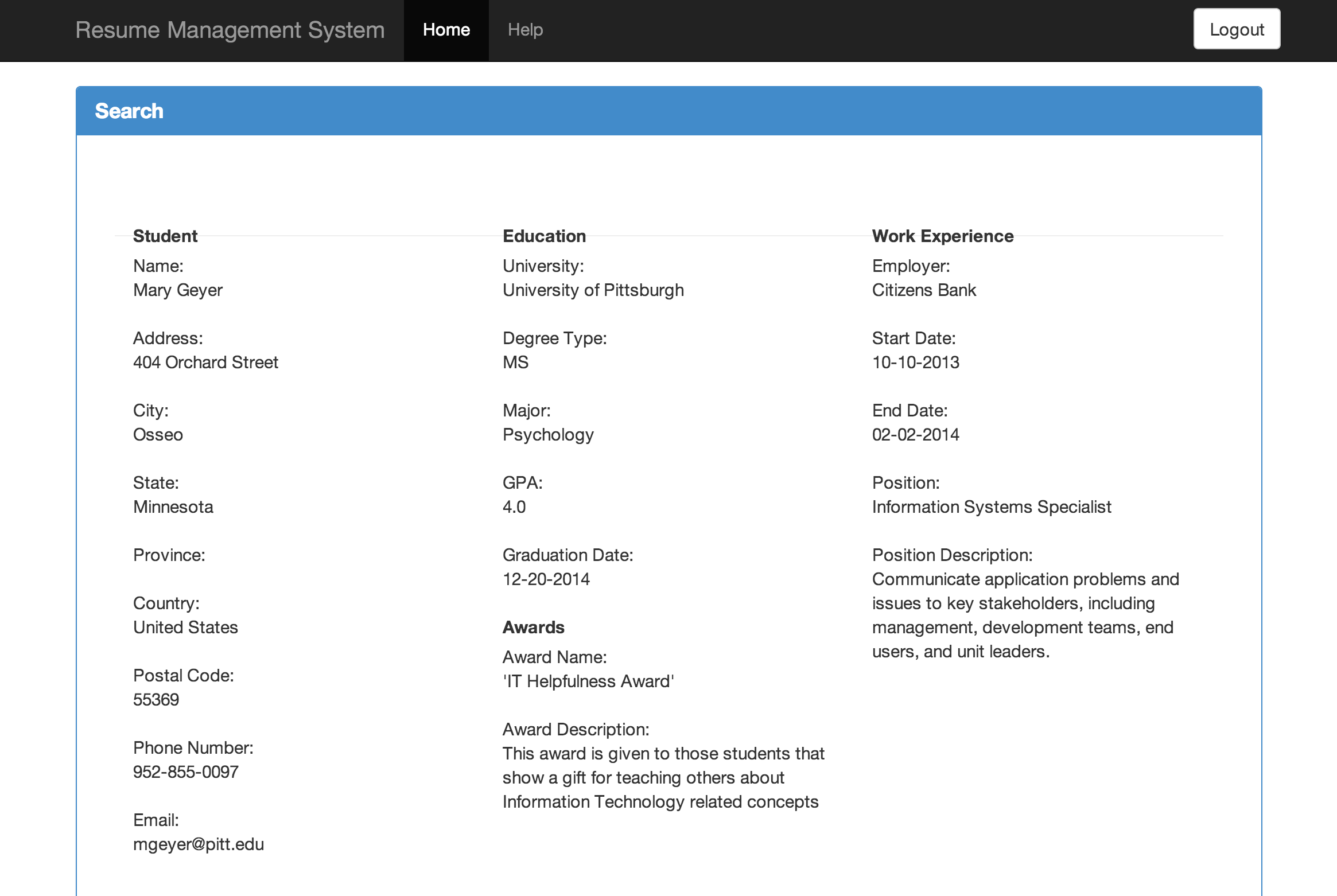
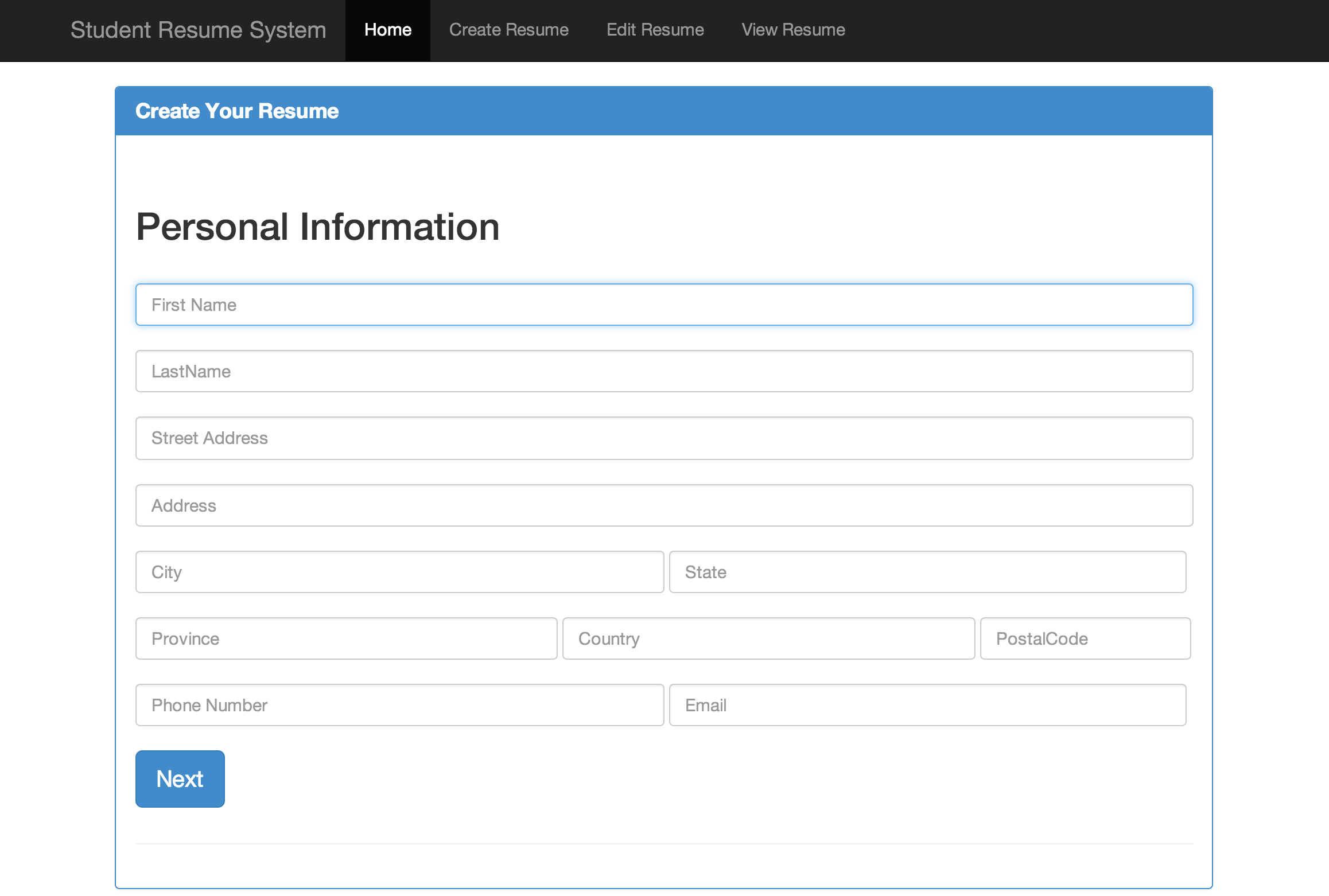
iSchool Resume and Portfolio Management System

Resume and Portfolio Management System Resume and Portfolio Management System Resume and Portfolio Management System Resume and Portfolio Management System

Resume and Portfolio Management System

Project:  Resume and Portfolio Management System

Dates(s):  Spring 2014

Students:  Jordan Feldman, Mandy Kendall, Naveen Srivastava

Programming languages/platforms/technologies:  Java, GlassFish, MySQL, jQuery, RESTful web services, Bootstrap, HTML5

Description: The goal of this project is to develop a prototype for a Resume and Portfolio Management system that would be used by the University of Pittsburgh School of Information Sciences students to connect with potential employers and to showcase their work.  This prototype will be further developed into a production system throughout the 2014-2015 academic year.

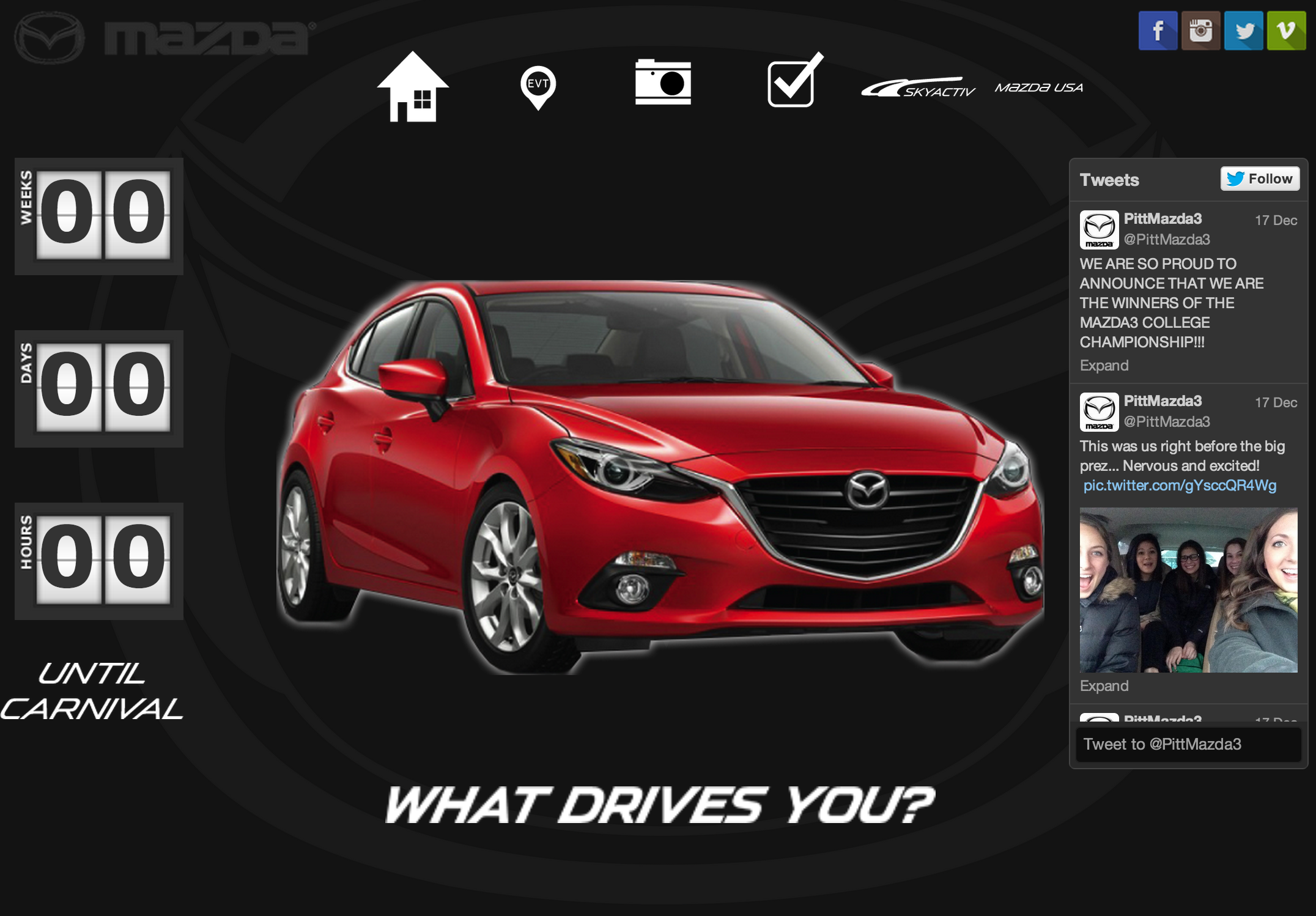
Marketing website for Mazda USA

Marketing website for Mazda USA


Project:  Marketing website for Mazda USA.

Dates(s):  Fall 2014

Students:  Jordan Feldman, Corbin Powlus

Programming languages/platforms/technologies:  PHP, HTML5

Description: iSchool students worked closely with a group of undergraduate students from the University of Pittsburgh Business School to develop a website for a marketing campaign for Mazda USA.  This project has won the Mazda national competition.